From an internal LMS to the Extended Enterprise LMS: how to train distribution channels in business without losing control
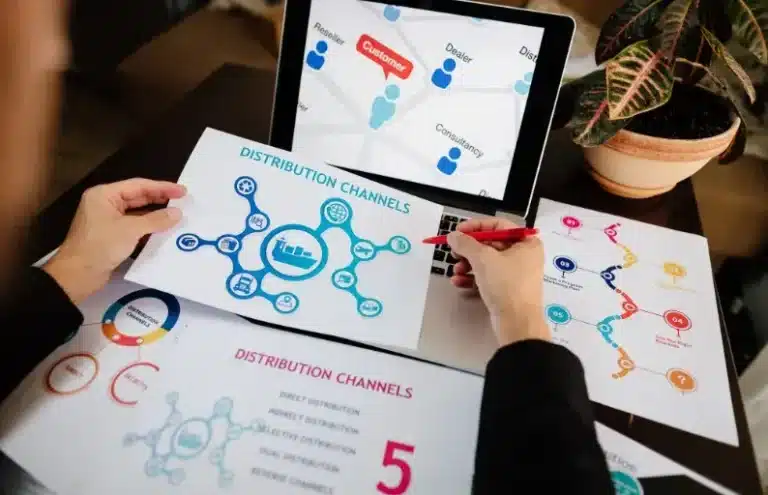
Unlike internal training, distribution channels operate in an environment where there is no direct hierarchical relationship to guarantee participation in training processes. In this context, training depends largely on the partner’s motivation and on the value they perceive in it.
That is why a Partner Enablement strategy supported by an Extended Enterprise LMS cannot be based on obligation; it must be built around the ability to help the partner sell better, reduce errors and gain commercial autonomy.
The aim is no longer simply to transfer content from the company to the outside world; it is to turn knowledge into a practical tool for the entire network. When distributors, franchisees or collaborators truly understand the product and know how to position it, they are able to maintain consistency and quality in every commercial interaction. And this is exactly what the brand needs in order to grow consistently.
This structural difference has profound implications. When there is no control over the training process, there is no control over the outcome either. How can you ensure that a partner has mastered the product before selling it? How can you guarantee that they communicate its benefits, limitations or use cases correctly?
Without a robust system, each intermediary ends up building their own narrative, based on partial experience or incomplete interpretations.
The business risk is clear. An inconsistent message is not simply a communication problem, but a direct threat to commercial performance. It can create mistrust among customers, lengthen sales cycles or even lead to missed opportunities due to a poor understanding of the product. It can even go as far as damaging the product’s image.
In competitive markets, where differentiation depends largely on how the solution is presented, these kinds of deviations have a tangible impact.
In this scenario, simply transferring content from the company to the outside world is no longer enough. It becomes necessary to build a system capable of sustaining consistency in a decentralised environment.
This is where the LMS changes role. It stops being an internal tool aimed at employees and becomes a strategic asset within the Extended Enterprise.
Within this extended enterprise model, this shift means understanding training as part of the business model. A mechanism that makes it possible to align all the players involved in the sale, regardless of their contractual relationship with the company.
In this sense, the LMS acts as the core of a connected learning ecosystem, where knowledge flows in a structured way across the entire network.
However, for this system to work, one factor is decisive: the partner’s perception. If the LMS is presented as an additional burden, adoption will be limited. If, on the other hand, it is perceived as a tool that makes selling easier, reduces errors and provides clarity, its use becomes natural.
The key is for the partner to understand that training is not an external obligation, but a way to improve their own performance.
At this point, the question is no longer how to force partners to complete training. It becomes something far more relevant: what value are you offering them through training that makes them want to do it?
Extended Enterprise LMS: how to design an effective Partner Enablement strategy
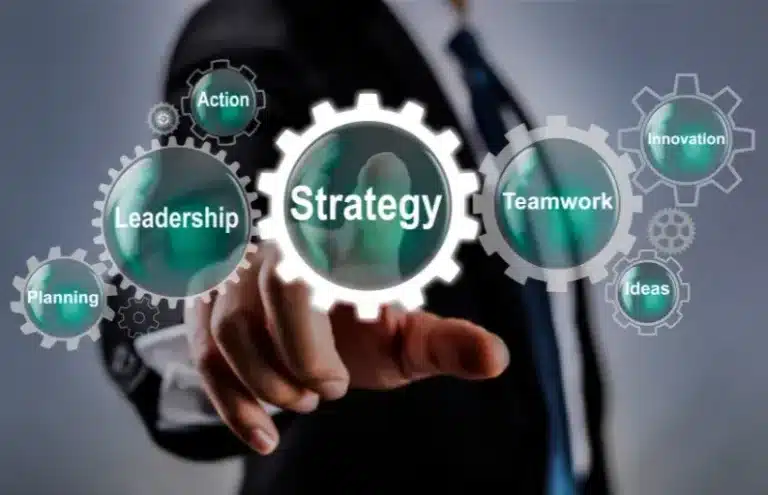
Once the first challenge has been overcome (understanding why training external stakeholders is more complex than training employees), the next question becomes even more decisive: how do you turn that training into a genuine growth driver? Because offering content does not guarantee results. What guarantees results is understanding how training is structured, distributed and integrated within the commercial ecosystem.
This is where the concept of Partner Enablement comes into play. It is not simply about training; it is about enabling partners to operate with autonomy, sound judgement and confidence.
Partner Enablement is, essentially, the process of transferring the company’s strategic knowledge across the entire external network so that every commercial interaction maintains the same level of quality.
From this perspective, training begins to fulfil three key functions within distribution channel training:
- 1. It acts as an activation tool, allowing a partner to start operating with a solid foundation from the outset.
- 2. It works as an alignment mechanism, ensuring that all stakeholders communicate a consistent message, regardless of their location or level of experience.
- 3. And finally, it becomes a commercial accelerator, reducing the time required for the partner to achieve optimal performance.
- 1. On the one hand, there is an initial phase that helps partners enter the business and provides them with essential knowledge.
- 2. Then, continuous training makes it possible to keep that knowledge up to date in an environment where products evolve rapidly.
- 3. And at a more advanced level, training becomes an element of specialisation and differentiation within the network.
However, there is one aspect that often makes the difference between a strategy that works and one that falls short: incentivisation. Because, in the absence of obligation, participation depends largely on perceived value.
What does the partner gain in return for investing their time in training?
Organisations that successfully activate their channel understand that training must be accompanied by tangible benefits. This may include access to exclusive resources, greater visibility within the ecosystem or commercial advantages that strengthen their positioning compared to other partners. In this way, learning stops being an isolated effort and becomes integrated into the business logic itself.
At this point, training is no longer perceived as a complementary activity, but as part of the growth model itself.
And it is precisely this integration that makes it possible to build a scalable partner network while maintaining control over the message and maximising the commercial impact of every interaction.
Extended Enterprise LMS architecture: how to scale training without losing consistency

An extended enterprise training platform makes it possible to train dozens or even hundreds of partners because it allows organisations to create multi-company environments with independent portals for each stakeholder, while keeping content centralised and aligned. This architecture is what ensures that network growth does not compromise message consistency.
When an organisation begins expanding its partner network, complexity does not grow linearly — it grows exponentially. What works with ten distributors stops being effective with fifty and becomes unsustainable when the network reaches hundreds of stakeholders.
At that point, how can you maintain a scalable training system without losing control?
The first obstacle usually appears within the platform itself. Many traditional LMSs have been designed with employees in mind, using closed and hierarchical structures that fail to accommodate the diversity of external stakeholders. This limits their ability to manage environments where each partner has different needs, contexts and access levels.
To address this challenge, organisations need to move towards Extended Enterprise LMS models that incorporate a multi-company architecture, making it possible to create independent environments within the same platform. This means that every distributor, franchisee or partner can operate within their own space, with their own branding, users and learning journeys.
This is where two key concepts come into play. On the one hand, there is the creation of a dedicated portal for each partner, which makes it easier to personalise the experience without losing overall control.
On the other hand, there is the ability to offer a white label LMS for partners, where training becomes integrated into the partner’s own environment, strengthening perceived value and encouraging adoption.
This model solves one of the most common tensions in distribution channels in business: how to combine personalisation with consistency. Because each partner needs to adapt learning to their own reality, while the brand must ensure that both the content and the messaging remain aligned across the entire network.
The solution lies in separating content management from content distribution. Knowledge is created and updated centrally, ensuring that all materials follow the same strategy. However, deployment takes place in a decentralised way, allowing each partner to access the content within their own environment.
This balance is what makes it possible to scale without losing consistency. It is also where the concept of a connected learning ecosystem becomes meaningful, with knowledge flowing in a structured way across every node in the network.
And within this scenario, having an interconnected LMS makes it easier for information to be updated in real time and delivered to each partner in the most appropriate way, maintaining consistency even in complex environments.
In practice, this type of architecture takes shape through platforms that allow multiple organisations to be managed within the same system, while maintaining centralised control over content and guaranteeing an experience tailored to each partner. Solutions such as evolCampus respond to this approach through multi-company environments that make it easier to create independent portals, allowing each distributor to operate with their own identity without losing content consistency or oversight from the parent brand.
When this technical foundation is designed properly, training stops being a process that is difficult to scale and becomes an infrastructure capable of growing at the same pace as the business, without losing alignment or quality in the message.
Distributor and partner onboarding: how to accelerate time to first sale

Well-structured distributor onboarding can dramatically reduce the time it takes for a partner to close their first sale, transforming months of inactivity into a structured, results-driven process. The key lies in applying an effective onboarding protocol that guides the partner from the very first interaction through to genuine commercial activation.
One of the most common problems in distribution channels is the inactive period between onboarding a partner and achieving their first sale.
During this phase — which in many cases lasts far longer than expected — distributors often have only partial information, scattered materials or simply lack a clear roadmap. The outcome is predictable: uncertainty, lack of confidence and limited or non-existent commercial activity.
This situation is rarely caused by a lack of interest. More often, it stems from the absence of a structured process. Because starting to sell a product — particularly one that is complex or requires technical explanation — involves mastering several elements at the same time. It is not enough to understand its features; partners also need to know how to position it, explain it and adapt it to different customer profiles.
This is where onboarding becomes decisive as the true starting point of commercial activation. A strong onboarding process acts as an accelerator, enabling partners to move from theory to practice as quickly as possible, shortening the learning curve and increasing confidence.
For this to work, the process must address three essential dimensions:
- 1. Product knowledge, including both features and use cases.
- 2. Positioning, meaning the way the product is presented in the market compared to alternative solutions.
- 3. Sales messaging, which transforms that knowledge into effective commercial conversations.
The importance of defining an onboarding protocol for business partners
- 1. An initial introduction to the product.
- 2. A commercial contextualisation phase.
- 3. A final action-oriented stage, where the partner can begin applying that knowledge to real opportunities.
Each stage should have a specific objective, so the partner can move forward clearly and measure their progress.
In this way, onboarding can be transformed into a guided experience, where learning is directly connected to action. Instead of simply accumulating information, the partner acquires the tools they need to start operating from the outset. And this has a direct impact on one of the most relevant indicators in this context: time-to-first-sale.
Reducing this time means more than improving operational efficiency. It means activating the channel sooner, generating initial real sales experiences and accelerating the moment when the partner starts delivering value to the business. In this way, onboarding becomes directly integrated into commercial dynamics.
External partner certification: how to boost performance with structured programmes
External partner certification makes it possible to keep partners activated and engaged over time by establishing a progression system that links knowledge to commercial performance. Unlike onboarding, which marks the entry point, certification defines how partners evolve within the ecosystem.
Once the partner has taken their first steps and started operating, the challenge changes. It is no longer about making the beginning easier, but about sustaining engagement over time.
Because one of the most common risks in distribution channels in business is a gradual loss of interest. Without a system that encourages continuity, many partners remain at a basic level of knowledge and never develop their full commercial potential.
This is where certification introduces a different logic. Instead of linear learning, it proposes a structured progression model, where partners can move through different levels according to their knowledge and performance.
This system, common in many channel programmes, takes shape through categories such as Gold, Silver or Platinum, which reflect the level of specialisation and commitment to the brand.
These levels fulfil several functions at once. On the one hand, they establish a clear development framework, where each partner knows what they need to do to progress. On the other, they create a sense of recognition that goes beyond training itself. Reaching a certain level is not only a technical matter; it also means securing a position within the ecosystem.
This prestige factor is key. Because, in the absence of obligation, motivation cannot depend solely on training content. It is necessary to include elements that strengthen perceived value. In this sense, certification introduces dynamics close to gamification, where progress, recognition and differentiation play a decisive role.
In addition, there is a direct relationship between certification level and commercial performance. Partners with a higher degree of specialisation tend to handle the product better, identify opportunities more accurately and convey greater confidence during the sales process. In many cases, this translates into a higher volume of business and more efficient sales cycles.
At the same time, certification makes it possible to segment the partner network according to knowledge and engagement. This helps identify more advanced profiles capable of handling complex projects, and distinguish them from those operating at a more general level. This differentiation is especially useful in environments where specialisation makes all the difference.
From this perspective, certification is not an add-on to the training process, but a tool for structuring channel growth. It introduces an evolution framework that connects learning with practice and helps sustain commercial activity over time without depending on occasional external incentives.
How to improve commercial ROI with sales training: LMS + CRM integration
To improve sales ROI with sales training, it is essential to integrate the LMS with the CRM and analyse the real impact of training on business results. LMS + CRM integration makes it possible to move beyond measuring completed courses and start understanding how training influences sales, conversion and channel performance.
For a long time, training has been evaluated using internal metrics: number of courses completed, completion rate or connection time. These indicators are useful for understanding activity, but insufficient when it comes to answering the key question: is this generating business?
This is where the main limitation of an isolated LMS appears. It can tell you who has completed a learning path, but not what happened afterwards. It does not show whether that partner is selling more, whether they have reduced errors in their sales pitch or whether they have improved their ability to close opportunities. In other words, it measures learning, but not impact.
The shift in approach involves connecting training with commercial performance. To do this, it is necessary to integrate the LMS into a connected learning ecosystem, where data does not remain in silos but is linked to other areas of the business. In this sense, understanding how to integrate an LMS with other business tools is key to building a system that can analyse the real impact of training.
This is where HR API integration and, especially, the connection with tools such as the CRM, becomes meaningful.
When the LMS is integrated with the CRM, the analysis takes on a new dimension. It is no longer simply about knowing who has learnt something, but about understanding how that learning influences commercial behaviour. This connection makes it possible to synchronise data automatically and build a training data flow that links training activity to real business indicators.
For example, it becomes possible to analyse what happens with partners who have completed a specific training programme compared with those who have not. Do they generate more opportunities? Do they close sales faster? Do they work with higher average deal values? This type of analysis makes it possible to identify patterns that would otherwise go unnoticed.
In this context, the LMS becomes part of an interconnected LMS, where training forms part of a broader system. This vision makes it possible to understand learning as a process that directly impacts commercial activity, rather than treating it as an isolated element.
From here, the indicators also evolve. Alongside traditional training metrics, other KPIs more closely linked to the business begin to gain relevance. Conversion rate, average deal value and speed of closing become key references for evaluating the impact of training. The aim is not to replace one set of data with another, but to connect them in order to obtain a complete view.
This approach opens the door to far more precise management of external training. It helps identify which content generates the greatest impact, which profiles respond best to certain learning paths and where there are opportunities for improvement. It also makes it easier to adjust the training strategy based on real results, rather than relying solely on perceptions.
Ultimately, understanding the benefits of integrating an LMS with a CRM means accepting that training cannot be evaluated in isolation. Its value lies in its ability to influence the business, and that connection only becomes visible when data is linked. This is where training becomes a decision-making tool.
Customer Training LMS: how to train customers to reduce support and increase revenue

A Customer Training LMS makes it possible to train customers so they use the product correctly, reducing support incidents and increasing long-term value. In many cases, business performance depends not only on how the product is sold, but on how it is used afterwards.
At this point, it is worth opening up a new perspective. So far, the focus has been on the sales network, but there is one factor many organisations overlook: end-customer behaviour.
What happens when the product is complex, requires configuration or involves continued use over time?
The customer experience no longer depends exclusively on the sale. It is also shaped by the customer’s ability to understand and apply what they have purchased.
This scenario is particularly relevant in sectors such as SaaS, where product value is built over time; machinery, where incorrect use can lead to technical issues; or pharmaceuticals, where precision in application is critical.
In all these cases, incomplete or incorrect adoption has direct consequences.
The problem is more common than it may seem. When customers do not fully understand the product, they tend to make mistakes, underuse features or rely constantly on support. This has a double consequence: on the one hand, it increases the company’s operational costs; on the other, it damages the customer’s perception of value, as they do not achieve the expected performance.
In this context, customer training becomes a strategic tool and an integral part of the user experience.
Through a Customer Training LMS, it is possible to offer structured content that guides customers from the very beginning, helping them understand the product, apply it correctly and get the most out of it.
In this way, the customer relationship is transformed. Instead of reacting to problems, the company anticipates them by providing the knowledge needed to avoid them. Training acts as a prevention mechanism that reduces dependence on support and improves user autonomy.
The impact of this strategy is reflected in two key dimensions:
- 1. Reducing incidents makes it possible to optimise internal resources and improve service efficiency.
- 2. A customer who understands and benefits from the product tends to stay longer, expand their use and, in many cases, generate new business opportunities.
What is Extended Enterprise Learning and why it is redefining corporate training
Extended Enterprise Learning responds to an increasingly common reality: knowledge can no longer remain confined within the company. In business models where distributors, partners, franchisees or customers form a direct part of the product experience, training becomes a key element in maintaining consistency and sustaining growth.
In this context, an extended enterprise LMS makes it possible to connect all these stakeholders within the same training system, aligning information, processes and objectives. The challenge is no longer simply to train employees, but to build an environment capable of scaling without losing control over the message, the experience and the quality of every interaction.
Checklist for choosing an Extended Enterprise LMS in 2026
Choosing an Extended Enterprise LMS means prioritising accessibility, ease of use and the ability to scale without unnecessary complexity, ensuring that every stakeholder within the ecosystem can access training without barriers and with a consistent experience.
At this stage, the question is no longer conceptual but practical: what features should an Extended Enterprise LMS include in order to train distribution channels, partners and customers effectively?
Not every solution is prepared to operate in environments where multiple profiles, organisations and needs coexist.
Beyond advanced functionalities or complex developments, there are several elements that become decisive for making the model work on a daily basis. The objective is not to add technological layers, but to remove friction and encourage adoption.
Before looking at specific criteria, it is important to understand that not all solutions are designed for this context. Identifying the features an effective e-learning platform should include helps avoid decisions that may limit scalability in the medium term.
In this sense, an e-learning platform designed for the Extended Enterprise should meet several key criteria:
- Easy and frictionless access: external users do not have the time or patience for complex processes. The easier it is to access the platform, the higher the usage rate will be.
- Clear and intuitive UX: the experience should be self-explanatory, especially for profiles that are not used to training environments.
- Multi-company capability: essential for managing different partners, distributors or customers within the same system without mixing environments.
- Segmented analytics: allows organisations to understand the behaviour of each group and make decisions based on real data.
- Cost scalability: the model must be able to grow without costs increasing disproportionately as the network expands.
| Criterion | What it means in practice | Risk if you do not have it |
|---|---|---|
| Ease of access | Direct access, with no installations or complex processes | Low adoption among partners |
| Intuitive UX | Clear navigation and autonomous learning without constant support | Early abandonment of training |
| Multi-company | Independent environments for each partner or customer | Lack of personalisation and disorganisation |
| Segmented analytics | Data broken down by channel, partner or customer | Decisions based on intuition |
| Cost scalability | A model that grows without driving up investment | A system that becomes unviable in the medium term |
FAQs about Extended Enterprise LMS and distribution channel training

What is the difference between an internal LMS and an extended enterprise LMS?
How can you encourage partners to complete training?
How long should distributor onboarding last?
How can you measure the ROI of external sales training?
Can an LMS be integrated with a CRM?
What is Extended Enterprise Learning?
We can define Extended Enterprise Learning as a training model that includes all stakeholders within the business ecosystem, beyond employees alone. Its purpose is to align knowledge across the entire network in order to improve consistency, efficiency and business performance.